Home > Pearl Worth
How Much Are Pearls Worth
If you’ve ever admired a string of glowing pearls and wondered, “How much are pearls worth?”—you’re not alone. Pearls have captivated collectors, royalty, and fashion lovers for centuries. But their value can range dramatically—from under $100 to well over $100,000, with fine quality pearls exhibiting high lustre and brilliance, significantly impacting their pricing and desirability in the market.
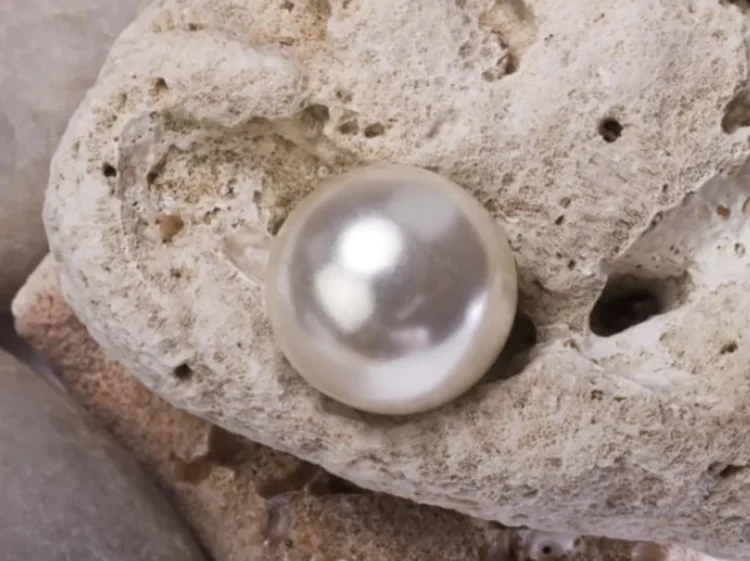
In this guide, we’ll break down exactly what determines pearl prices, the different types of pearls on the market—including the cultured pearl and luxury pearls—how much each is worth, and how to shop smart for pearls that match your budget and style. Whether you’re buying your first pearl necklace or investing in a rare gem, this comprehensive breakdown will help you understand what you’re paying for—and why.
Understanding Pearl Value
Determining the value of a pearl is a nuanced process that involves evaluating several key factors. Each of these factors contributes to the overall worth of the pearl, making it essential for buyers to understand what to look for. Here’s a closer look at what influences pearl value and pearl prices:
Pearl Prices by Type: Quick Comparison
| Pearl Type | Pearl Price Range (Strand) | Typical Size | Color Range | Notes |
|---|---|---|---|---|
| South Sea | $1,000 – $100,000+ | 8mm – 20mm | White, Silver, Golden | Rare, large, and highly prized |
| Tahitian | $500 – $25,000+ | 8mm – 16mm | Black, Green, Peacock | Naturally dark and exotic |
| Akoya | $300 – $10,000+ | 5mm – 9mm | White, Cream, Rose | High luster, traditional bridal pearls |
| Freshwater | $50 – $2,000+ | 4mm – 12mm | White, Pink, Lavender, Peach | Affordable and widely available |
| Natural (Wild) | $500 – $2,000,000+ | Varies | Varies | Extremely rare and mostly auctioned |
What Affects the Value of a Pearl?
Pearls are one of the few organic gemstones, created by living mollusks over months—or even years. Because of their natural formation process, no two pearls are exactly alike. This makes evaluating the value of a pearl both an art and a science.
Whether you’re buying pearls for style, sentiment, or investment, it’s important to understand the seven key factors that influence a pearl’s value:
1. Type of Pearl
The pearl type lays the foundation for its value. Different types are grown in different regions, using different mollusks and farming methods—all of which influence a pearl’s size, luster, rarity, and cost.
Here are the four main types of cultured pearls you’ll find on the market:
South Sea Pearls
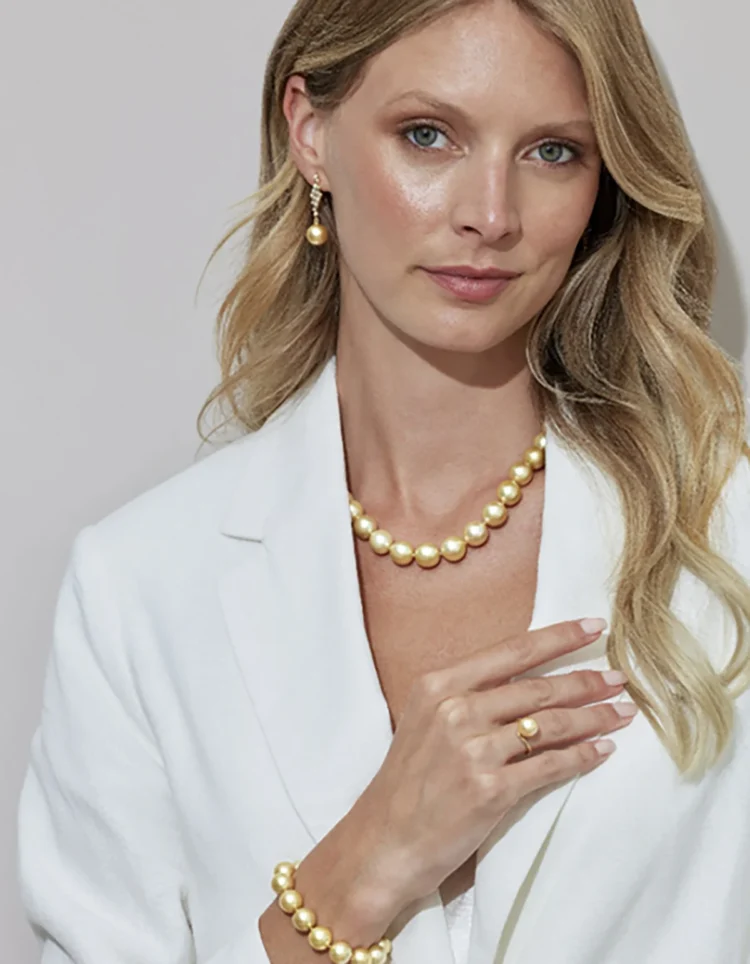
Grown in the warm waters of Australia, Indonesia, and the Philippines, South Sea pearls are the largest and often most valuable cultured pearls in the world. Their thick nacre and soft, satiny luster make them a favorite among collectors. These pearls range in color from silvery white to deep golden, with golden South Sea pearls being especially rare and sought after.
Tahitian Pearls
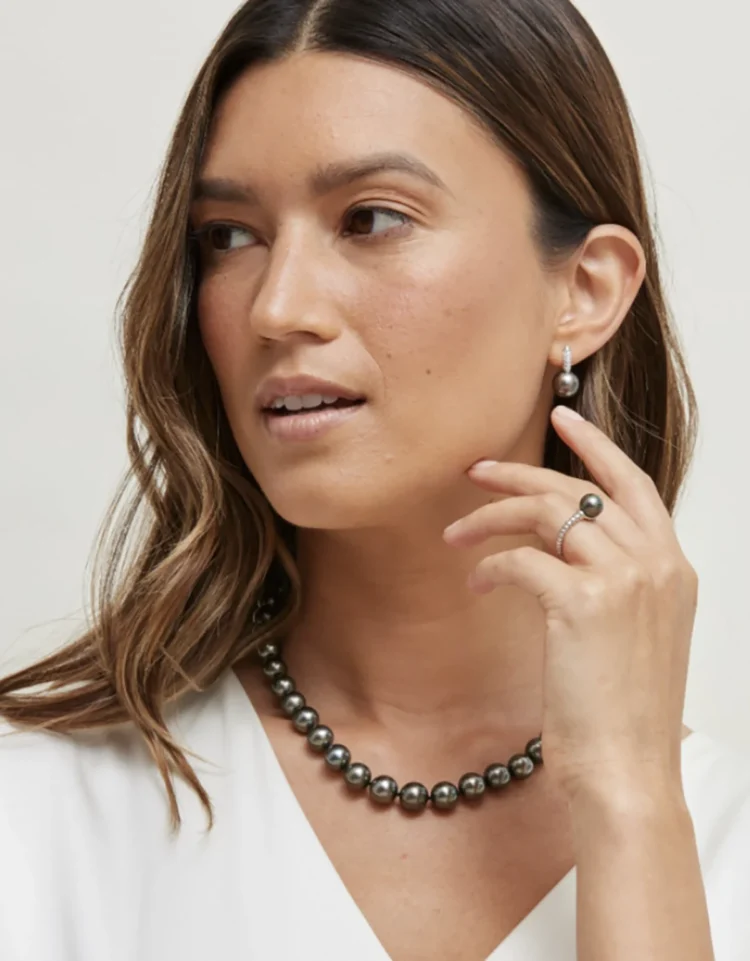
Cultivated in the lagoons of French Polynesia, Tahitian pearls are naturally dark and range in color from charcoal black to green, peacock, silver, and eggplant hues. Their dramatic overtones and exotic allure make them highly desirable, especially in larger sizes or matched strands.
Akoya Pearls
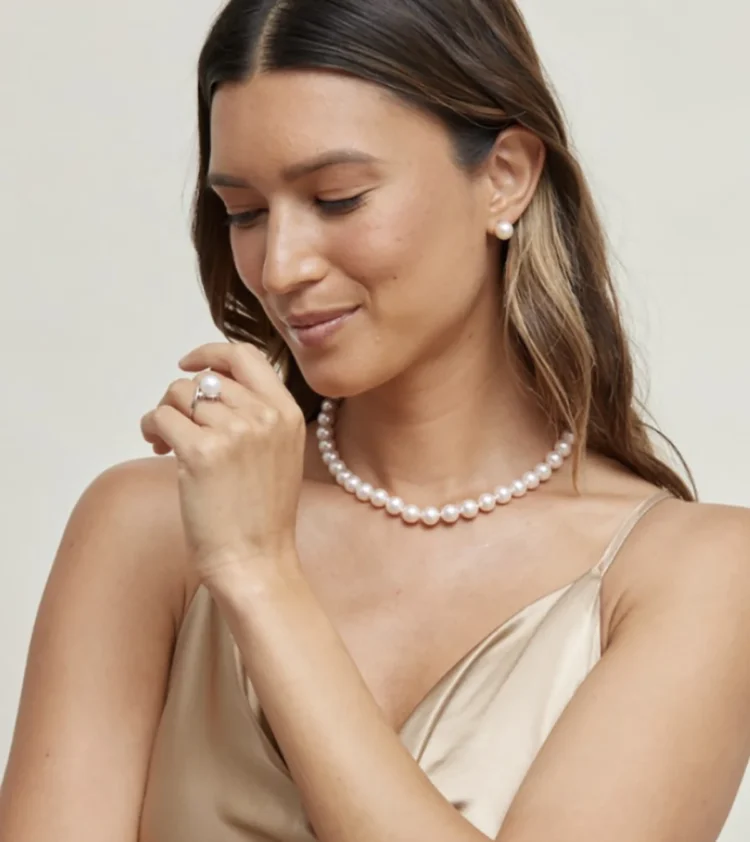
Native to Japan (and now also grown in China and Vietnam), the Akoya pearl is renowned for its perfectly round shape and brilliant mirror-like luster, making it a prized material in high-end jewelry due to its unique qualities and market value. These are the classic “white pearls” associated with traditional elegance, bridal jewelry, and formal strands.
Freshwater Pearls
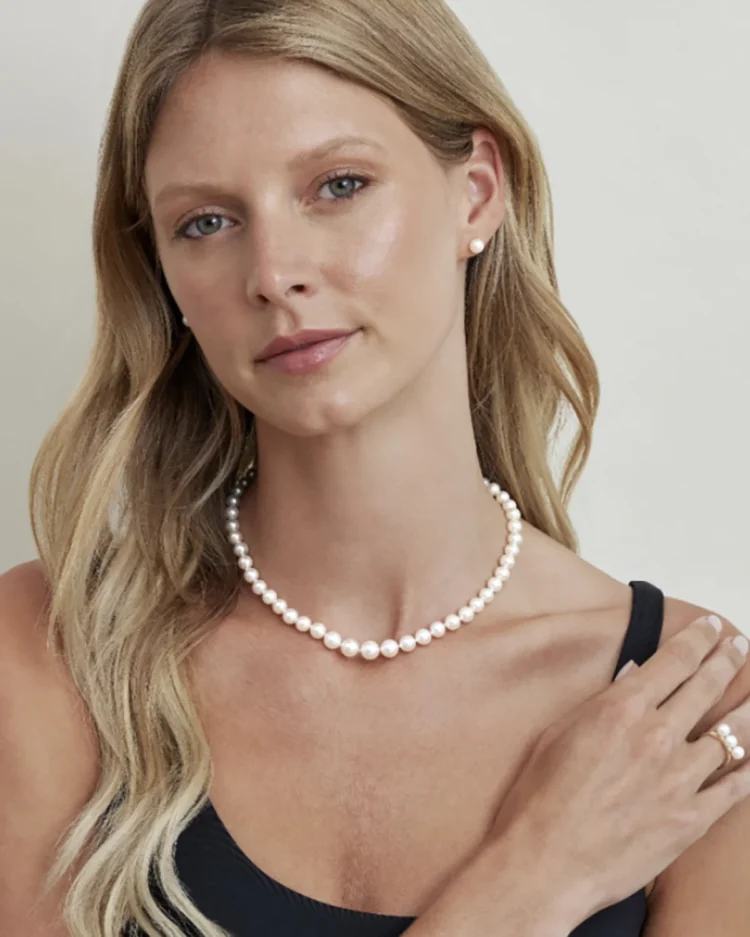
Cultivated in freshwater lakes and rivers—mostly in China—these pearls are the most affordable and versatile. They come in a wide range of shapes, sizes, and natural pastel colors such as pink, lavender, and peach. Modern cultivation techniques have made round, high-luster freshwater pearls nearly indistinguishable from Akoya pearls at a fraction of the price.
Pearl Origin: Cultured Pearls vs. Natural Pearls
In addition to type, a pearl’s origin—whether it’s a natural pearl or a cultured pearl—has a significant impact on its value. When comparing natural and cultured pearls, it’s important to consider their differences in formation, rarity, and market value.
- Cultured pearls are formed with human assistance. Pearl farmers carefully implant a nucleus (typically a shell bead or tissue graft) into an oyster or mussel to stimulate nacre production. These cultured pearls are still organic and real, but far more available and affordable than their wild counterparts. Today, over 99% of the pearls on the market are cultured.
- Natural pearls form without any human interference, often by chance when a parasite enters the mollusk. These natural pearls are exceptionally rare, and most are found in antique jewelry or sold at auction. Depending on their provenance, a natural pearl can be worth tens of thousands—or even millions—of dollars.
Natural pearls are generally not used in modern commercial jewelry due to their scarcity, but they remain highly prized by collectors and historians. If you’re purchasing a natural pearl, certification is essential to verify authenticity.
2. Pearl Luster
Luster refers to the way light reflects off a pearl’s surface. It’s one of the most visible—and most important—indicators of a pearl’s quality.
- High-quality pearls reflect light sharply and clearly, appearing almost like a mirror. This is known as “high luster.”
- Lower-quality pearls may look dull, chalky, or blurry in their reflections.
Luster is especially critical for Akoya pearls, where sharp reflection and brightness are key selling points. In contrast, South Sea pearls tend to have a softer, more diffused glow that’s still highly valued for its elegance.
3. Pearl Surface Quality
Because pearls are natural products, it’s normal for them to have minor surface imperfections such as tiny pits, spots, or ridges on the pearl surface.
However, the fewer and less visible the blemishes, the more valuable the pearl.
Surface quality is graded by:
- Spotting or blemishes: Are they visible to the naked eye?
- Luster disruption: Do flaws interfere with the pearl’s glow?
- Symmetry and finish: Is the surface smooth and even?
While completely flawless pearls are extremely rare (and priced accordingly), many pearls with minor blemishes offer excellent value—especially when those imperfections are on less visible parts of the pearl, like the underside. Note: A smoother surface not only enhances visual appeal but also helps reflect light more evenly, improving overall luster.
4. Pearl Shape
Pearls come in many shapes, and each has its own charm. That said, a perfectly round pearl is the rarest and most prized pearl shape, especially in matching strands.
Pearl shapes include:
- Round: The most valuable and hardest to cultivate
- Near-round: Slightly off-round, often indistinguishable when strung
- Oval: Elegant and elongated
- Button: Flat on one side, great for earrings
- Drop: Teardrop-shaped; popular in pendants
- Baroque: Irregular and freeform; loved for their uniqueness
Round
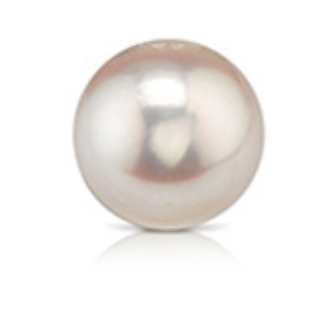
Round pearls are the most valuable and often most desirable of all pearl shapes. Semi-round pearls are virtually round, and will appear round when strung together as a necklace or bracelet.
Drop
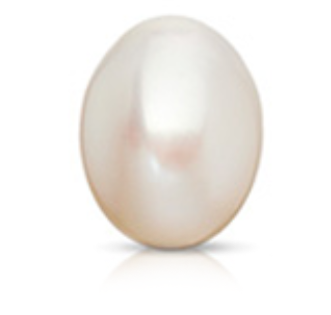
Drop pearls are symmetrically extended pearls that frequently take the form a tear-drop. Drop pearls are not only unique, but extremely valuable when found with the perfect “pear-shape.”
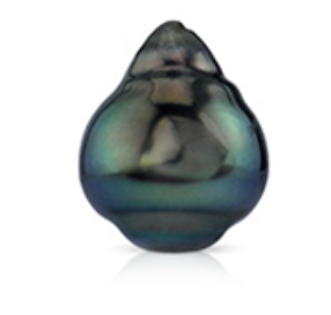
Baroque
Baroque pearls are irregular in shape and at times elongated. Many people love the distinct “character” of baroque-shape pearls. These pearls are frequently found in designer jewelry pieces.
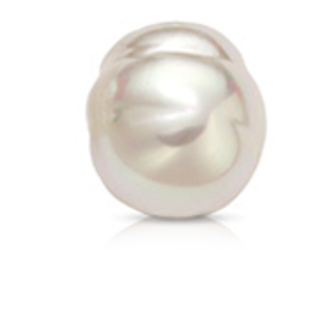
Circle Baroque
Circle-Baroque pearls are easily distinguished by their unique rings surrounding the pearl. Circle-Baroque shapes are most common in Tahitian and South Sea Pearls. These are generally the most affordable of all pearl-shapes.
While round pearls command the highest prices, baroque pearls are gaining popularity for their artistic, organic look—and can be a great option for buyers who want a bold statement at a lower price point.
5. Pearl Size
Pearl size is typically measured in millimeters across the diameter of the pearl.
As a rule, larger pearls are the more valuable pearl size, assuming all other quality factors (like luster and surface) are equal. This is because larger pearls take longer to form and are more difficult to cultivate.
Typical sizes by type:
- Akoya pearls: 5–9mm (with 7.5mm being the most popular)
- Freshwater pearls: 6–12mm (occasionally larger)
- Tahitian pearls: 8–15mm
- South Sea: 10–20mm+
Example:
- A 6mm Akoya strand might retail for $500–$700
- An 8mm Akoya strand of similar quality might fetch $1,200–$2,000
Size affects not just price, but also the presence a piece has when worn—making it an important consideration for both aesthetic and budget.
6. Pearl Color
Pearls naturally come in a wide variety of colors. While white and cream are the most traditional, less common colors can drive up value due to rarity.
Popular pearl colors by type:
- Akoya: White, cream, rose overtones
- Freshwater: White, peach, pink, lavender
- Tahitian: Black, peacock, green, aubergine
- South Sea: White, silver, golden
Color preferences vary by region and culture—for example, golden pearls are highly prized in Asia, while classic white pearls remain popular in the West.
The most valuable colors tend to be:
- Deep golden South Sea pearls
- Peacock Tahitian pearls with multi-colored iridescence
- Lavender Freshwater pearls with high luster and smooth surfaces
Color value also depends on evenness across the pearl and its desirability in the market.
7. Pearl Nacre Quality
Nacre is the crystalline substance secreted by the mollusk that forms the pearl.
Thicker nacre contributes to:
- Deeper, more glowing luster
- Better durability over time
- Higher value
For example:
- Akoya pearls have relatively thin nacre (often 0.35–0.7mm), so it’s essential to ensure they’re well-formed and not over-processed.
- South Sea and Tahitian pearls naturally develop thick nacre (1.5–4mm), making them more durable and often more expensive.
Thin nacre can lead to:
- A dull appearance
- A shorter lifespan
- Peeling or flaking over time
Natural vs. Cultured Pearls: Which Is More Valuable?
Natural pearls are extremely rare today, formed entirely without human intervention. They’re typically found through chance, and are most often sold at auction or collected as antiques. One natural pearl can fetch hundreds of thousands to millions depending on provenance. Natural saltwater pearls, for example, have commanded significantly higher prices at auctions due to their rarity and the unique conditions under which they form.
Cultured pearls are farmed with the help of farmers who insert a nucleus into an oyster or mussel to stimulate pearl growth. While they’re more common, cultured pearls can still be incredibly valuable when top quality.
Today, over 99% of pearls sold are cultured, and thanks to advanced farming techniques, many rival the beauty of natural pearls—at a fraction of the cost.
How Are Pearls Graded?
While there’s no single global pearl grading system, most jewelers use either:
- A–AAA (used for Akoya and Freshwater pearls)
- A–AAAA (used for South Sea and Tahitian)
- Gem Grade / Hanadama for top-tier Akoya pearls
| Grade | Description |
|---|---|
| A | Noticeable imperfections, average luster |
| AA | Moderate blemishes, good luster |
| AAA | High luster, nearly flawless surface |
| AAAA | (for some South Sea/Tahitian) Top 1% quality |
| Hanadama | Laboratory-certified Akoya with highest luster and nacre |
Always check the grading system your retailer uses—reputable jewelers should be transparent. Pearl quality is crucial in determining the value and desirability of pearl jewelry, as higher quality pearls often result in better environmental conditions and sustainable practices.
Real-Life Buying Scenarios: What Can You Get for Your Budget?
Under $200
- A classic Freshwater pearl necklace or bracelet
- Baroque pearl earrings
- Single pearl pendants
$200 – $1,000
- Higher-grade Freshwater pearls
- Entry-level Akoya strands
- Smaller Tahitian pearl earrings or pendants
$1,000 – $5,000
- High-grade Akoya or Freshwater strands
- Mid-size Tahitian or South Sea pendants
- Matched earring sets with excellent luster
$5,000 – $20,000+
- Fine-quality South Sea or Tahitian saltwater pearl strands
- Custom jewelry with matched pearls
- Investment-grade Akoya saltwater pearls with perfect roundness and high luster
- Vintage pearl jewelry with enduring worth and appeal as an heirloom piece
- Pieces in this range are commonly insured with a specialty jewelry insurance provider such as BriteCo to cover loss, theft, and damage.
Understanding Pearl Jewelry Value
Beyond the pearls themselves, the value of pearl jewelry is also influenced by the quality of the metal, craftsmanship, and overall design. High-quality settings in gold or platinum, secure clasps, and well-balanced layouts can elevate a pearl jewelry piece’s durability, beauty, and worth. Thoughtful design and expert craftsmanship ensure that the jewelry not only looks elegant but stands the test of time.
From freshwater pearl earrings to and heirloom pearl necklace, the value of pearl jewelry begins with how much the pearls are worth.
Are Pearls a Good Investment?
Pearls can absolutely be a worthwhile investment—especially when buying higher-grade, timeless pieces from trusted sources. Here’s why:
- Durability: With proper care, pearls can last generations.
- Timeless appeal: Styles change, but pearls remain in fashion.
- Resale value: High-quality pearls can retain or increase in value—especially rare colors or natural varieties.
However, pearls are not like gold or diamonds in terms of liquidity. Their value is tied closely to their condition, quality, and origin. Think of pearls as a wearable legacy more than a quick-profit asset.
Expert Tips for Buying Pearls That Are Worth the Price
- Buy from direct pearl specialists like Pearl Lumina, which offer fair pricing and quality assurance.
- Ask about origin—certain regions (e.g., Japan for Akoya, Australia for South Sea) are known for producing higher-quality pearls.
- Request certifications if you’re purchasing investment-level pieces.
- Compare grades side by side—sometimes a slightly lower grade offers 90% of the beauty at a fraction of the cost.
- Consider necklace length and style—shorter strands cost less than longer ones, even with the same pearls.
FAQ: How Much Are Pearls Worth?
Can I get real pearls for under $100?
Yes! Many freshwater pearl pieces—especially single pearl pendants or baroque earrings—can be found under $100.
Why do some pearl strands cost over $10,000?
Those usually feature high-quality, large, perfectly round pearls with high luster and few imperfections—often from the South Sea or Tahiti. Round freshwater pearls, however, offer a more affordable alternative to the more expensive Akoya pearls, providing similar aesthetic qualities at a lower price point.
What’s the rarest pearl color?
Naturally blue, golden, and peacock pearls are among the rarest and most valuable, depending on the type.
How can I tell if a pearl is valuable?
Check the 7 value factors: type, luster, surface, shape, size, color, and nacre. If you’re unsure, buy from a trusted source and ask for details about grading.
Do pearls lose value over time?
Not necessarily—if stored properly and kept in good condition, pearls can maintain or even increase in value, especially vintage and heirloom pieces.
Final Thoughts: Finding the Right Pearl for You
Pearls are one of the most personal and versatile gemstones you can buy. Whether you’re choosing a strand for a wedding, a gift for a loved one, or an heirloom to pass down, there’s a pearl for every purpose—and every budget.
At PearlLumina, we’re proud to offer premium-quality pearls at exceptional value, direct from the source. From delicate studs to investment-grade strands, every piece is backed by our commitment to craftsmanship and customer satisfaction.