Home > Natural Pearls
Natural Pearls
Natural pearls were once the most treasured gemstones in the world—revered by royalty, collectors, and jewelers alike. Formed entirely by chance inside wild oysters or mussels, these pearls remain some of the rarest and most valuable natural gems known to humankind.
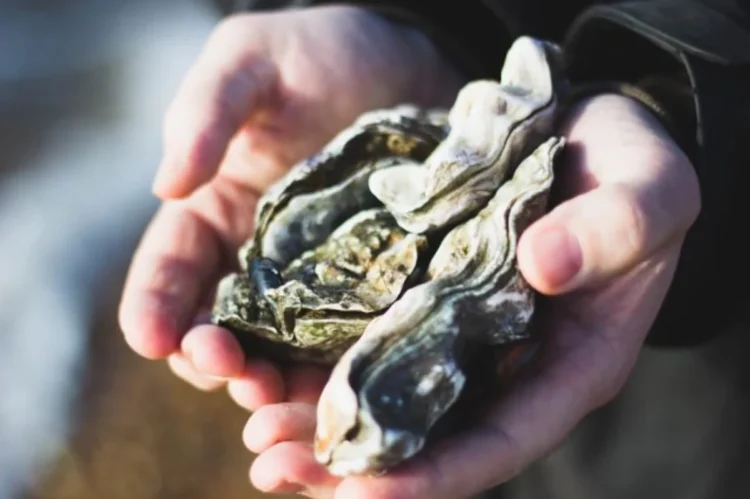
Today, natural pearls are nearly impossible to find in the wild. Most are discovered in antique jewelry or at high-end auctions. In this guide, we’ll explore what makes them so unique, how they form, and how they compare to cultured and imitation pearls.
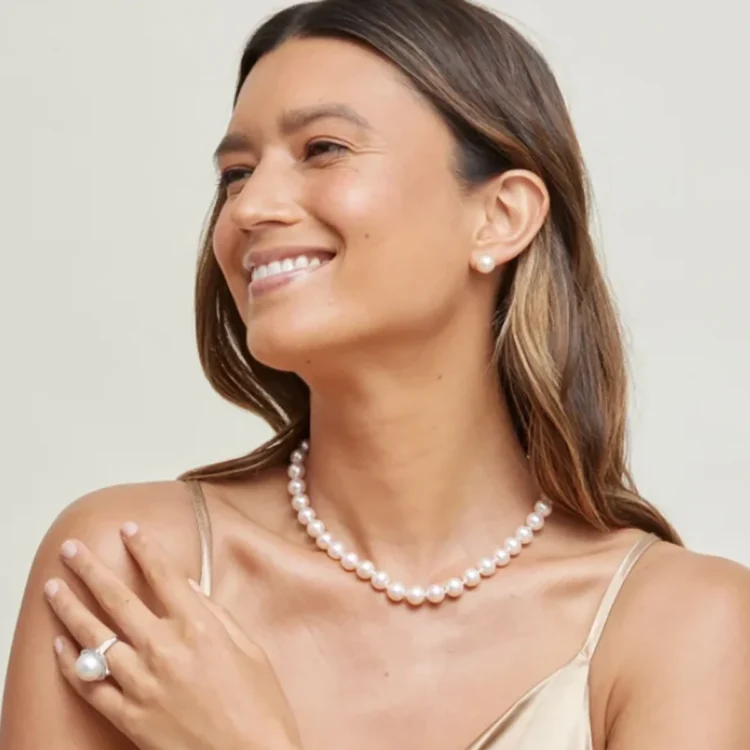
What Are Natural Pearls?
Natural pearls are formed when an irritant—such as a grain of sand, shell fragment, or parasite—enters a mollusk’s soft tissue. In response, the mollusk secretes layers of nacre (also called Mother of Pearl) to protect itself. Over time, this nacre builds up to form a pearl. This process happens entirely without human intervention. Unlike cultured pearls, there is no nucleus surgically implanted into the oyster. The result is a pearl made of 100% nacre, through and through.
Because this process is purely accidental, natural pearls are exceedingly rare. In fact, it’s estimated that less than 1 in 10,000 wild oysters will produce a natural pearl—and of those, only a small fraction are of gem quality.
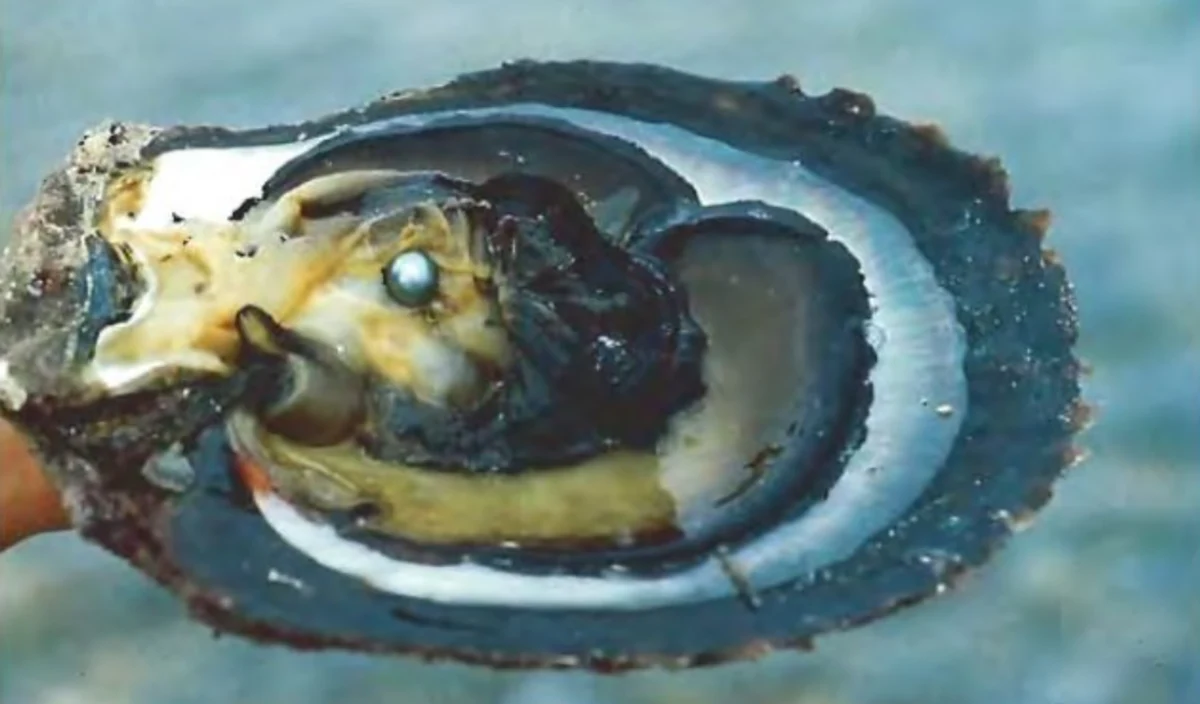
A 14-mm cultured black pearl emerges from the gonad of this P. margaritifera grown in the Marutea lagoon. Note the mantle surrounding the pearl, and the characteristic black color on the inside edges of the shell.
How Do Natural Pearls Form?
The formation of a natural pearl is nature’s way of protecting a mollusk. When an irritant invades the oyster or mussel, the animal reacts by coating the object in layers of nacre, the same iridescent material that lines its shell. This process is how mollusks produce pearls, whether in saltwater or freshwater environments.
The 3 Key Elements of Natural Pearl Formation:
- Spontaneity: The irritant must enter by accident.
- No human involvement: No nucleus or tissue is implanted.
- Time: It can take several years for a natural pearl to form fully.
Because there is no way to predict or control this process, and because many mollusks are harvested before a pearl can form, natural pearls are exceptionally rare in today’s market.
A Brief History of Natural Pearls
The history of natural pearls spans thousands of years, from ancient civilizations to modern royalty.
- In ancient Egypt, natural pearls were buried with pharaohs as symbols of the afterlife.
- Roman nobility wore them as signs of power and sophistication.
- In the Middle Ages, pearls were worn by European monarchs and the elite.
- During the Renaissance and Victorian eras, pearls became staples in aristocratic fashion.
By the 19th century, natural pearl diving had become a booming industry in the Persian Gulf, India, and Sri Lanka. However, overharvesting and pollution led to the decline of natural pearl beds, and the industry was largely replaced by cultured pearl farming in the early 20th century.
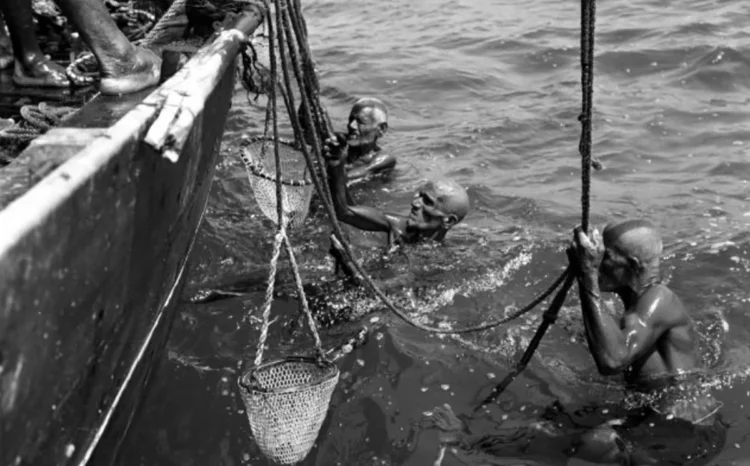
Bahrain pearl divers shave their heads, grease their bodies and use ropes and baskets to dive for natural pearls. Krikor calls them “The Japanese who killed the Natural Pearl.” Image Source: Selamta Magazine
Natural vs. Cultured vs. Imitation Pearls
Understanding the difference between pearl types is essential when shopping or evaluating a piece of jewelry. Both natural and cultured pearls are real, while imitation pearls are fake and aren’t considered gemstones at all.
| Feature | Natural Pearls | Cultured Pearls | Imitation Pearls |
|---|---|---|---|
| Formation | Spontaneous, natural irritant | Nucleated by humans, grown organically | Artificially made in factories |
| Nacre Content | 100% nacre throughout | Nacre layered over bead nucleus | No nacre |
| Occurrence | Extremely rare | Common and widely available | Mass-produced |
| Market Availability | Mostly antique or auction | Jewelry retailers worldwide | Costume jewelry, fashion accessories |
| Value | Very high due to rarity and age | High to moderate (depending on type/quality) | Low |
| Testing Required? | Yes (X-ray, lab certification). Verifying pearl quality through official gemological certification is crucial due to their rarity and cost. | Sometimes (for high-value items) | No |
Where Are Natural Pearls Found?
Historically, natural pearls were sourced from wild oysters harvested by free divers in some of the world’s most biodiverse marine regions:
- The Persian Gulf was once the epicenter of the global natural pearl trade, particularly the warm, shallow waters near Bahrain and Qatar.
- The Red Sea, especially along the coasts of Egypt and Sudan, was another rich source of natural pearls, valued for their subtle color and quality.
- Sri Lanka and the Gulf of Mannar (India) were known for their deep tradition of pearl diving, with records dating back to ancient times. These regions were highly prized by colonial powers for their abundant pearl fisheries.
- Bahrain, earned global recognition for producing some of the most lustrous natural pearls in history. Its pearls were known for their exceptional nacre and slightly rose-tinted hue.
- Mexico, particularly along the Baja Peninsula, produced natural black pearls harvested from the black-lipped oyster.
Due to overharvesting, pollution, and environmental decline, these natural pearl beds have been largely exhausted. Today, the vast majority of natural pearls are discovered in antique jewelry, estate collections, or auction sales. Commercial harvesting is now virtually nonexistent.
How to Identify a Natural Pearl
Because natural pearls and cultured pearls often look identical from the outside, visual inspection alone is not enough to confirm a pearl’s origin. The only reliable way to identify a natural pearl is through advanced gemological testing.
Indicators of a Natural Pearl (but not proof):
- Antique setting (pre-1920s)
- Slightly irregular shape and surface texture
- Soft, radiant luster
- Historical provenance
Testing Methods:
- X-ray Examination: Reveals concentric layers throughout (natural) vs. a solid bead nucleus (cultured)
- Drill Hole Inspection: Experts can detect nacre thickness and internal structure
- Gem Lab Certification: A report from a trusted lab like GIA or SSEF provides conclusive evidence
Are Natural Pearls More Valuable Than Cultured Pearls?
Yes. Due to their rarity, organic formation, and antique value, natural pearls are significantly more valuable than cultured pearls—especially if:
- The pearl is round, large, and high-luster
- It is part of a matched strand or set
- It comes with historical provenance or lab certification
Establishing the pearl quality is crucial for determining the value of natural pearls. A single natural pearl of exceptional quality can fetch tens of thousands—or even hundreds of thousands—of dollars. Entire strands of matched natural pearls can reach auction prices in the millions, depending on their condition, size, and origin.
However, not all natural pearls are perfect. Many are irregular in shape, off-round, or have surface blemishes—which only adds to their organic charm and uniqueness.
What About Cultured Pearls?
While natural pearls occur entirely by chance, cultured pearls are created through human-assisted farming—but they are still real, organic gemstones.
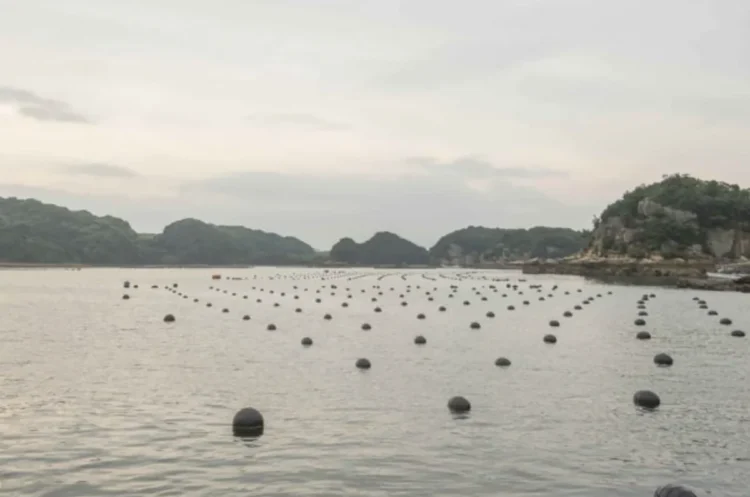
In cultured pearl production, a small bead or tissue graft is inserted into a mollusk to stimulate nacre formation. The pearl then grows inside the oyster or mussel over several months or years, just like a natural pearl would.
Why Are Cultured Pearls Popular Today?
Today, over 99% of pearls on the market are cultured. They offer all the beauty of natural pearls—at a price and availability suited to modern buyers.
- They’re indistinguishable from natural pearls to the untrained eye
- They offer a wider range of shapes, colors, and sizes
- They’re more accessible and affordable
- They can be farmed sustainably, supporting ethical practices
Sustainability and the Shift from Natural to Cultured Pearls
For centuries, natural pearls were the pinnacle of luxury—but the cost of that luxury wasn’t just financial. The traditional methods of harvesting wild oysters took a serious toll on marine ecosystems, contributing to the depletion of oyster populations around the world.
By the early 20th century, overharvesting, pollution, and habitat destruction had pushed many natural pearl-producing regions to the brink. Divers would open hundreds or even thousands of wild oysters just to find one pearl—often damaging delicate underwater environments in the process.
The Rise of Cultured Pearls: A Turning Point
The invention of cultured pearl farming by Kokichi Mikimoto in 1893 changed the future of the pearl industry. Instead of relying on chance, pearl farmers could grow pearls sustainably by carefully cultivating oysters and mussels in protected environments.
This innovation:
- Reduced pressure on wild oyster populations
- Created consistent, high-quality pearls without harming ecosystems
- Made pearls more widely accessible while preserving their natural origin
Today, nearly all fine pearl jewelry—from Akoya strands to Tahitian pendants—is made with cultured pearls. These pearls are grown in clean, monitored waters, where farmers prioritize mollusk health and environmental balance.
Why Cultured Pearls Support Sustainable Jewelry
Pearl farming is one of the few forms of gem production that is both low-impact and eco-positive. In order to produce high-quality pearls, oysters must live in clean, thriving marine environments—which means responsible pearl farms help protect local ecosystems.
In fact, some farms:
- Monitor water quality and reduce pollution
- Protect biodiversity in local reef systems
- Support coastal communities with fair labor practices
When managed well, cultured pearl farms can serve as natural filters for ocean health—with oysters helping to clean the water around them. In fact, an oyster can filter up to 50 gallons of water per day, helping improve water quality in its environment.
The Ethical Choice for Modern Jewelry
Natural pearls are beautiful and rare—but the environmental cost of sourcing them today would be far too high. That’s why most countries have banned or restricted wild pearl diving. Cultured pearls offer a sustainable, ethical alternative that still honors the beauty of nature.
At The Pearl Source, we work with farms that prioritize environmental care and quality. Every cultured pearl we offer is a testament to the natural world—and the progress made to protect it.
FAQ: Natural Pearls
Are all antique pearls natural?
Not necessarily. Cultured pearls emerged in the early 1900s. Pieces made after 1920 may contain cultured pearls unless otherwise verified.
How can I tell if my pearl is natural?
Professional testing (such as X-ray or certification) is required to determine origin. Visual cues alone are not reliable.
Are natural pearls still harvested today?
Rarely. Most countries have banned or heavily restricted wild pearl diving to protect oyster populations.
Do natural pearls come in different colors?
Yes. Natural pearls can be white, cream, pink, silver, or even black—depending on the mollusk and environment.
Are natural pearls durable?
Yes, especially those with thick nacre. Like cultured pearls, they should be stored flat, away from other jewelry, and cleaned gently.
Final Thoughts: Are Fine Quality Natural Pearls Worth It?
Natural pearls are undoubtedly rare and captivating. But due to their scarcity, price, and limited availability, they are best suited for collectors, antique jewelry lovers, or those investing in historical gems. For the vast majority of buyers, cultured pearls are the most sensible and beautiful choice. They offer the same organic origin and luster as natural pearls—with far greater accessibility and variety.
So whether you’re seeking a timeless strand, a bold statement piece, or a meaningful gift, cultured pearls provide the elegance and authenticity you’re looking for—without compromising on quality or value.
Shop Real Cultured Pearls with Confidence
Natural pearls may be rare and historically significant—but they are no longer the standard in fine jewelry. In fact, nearly every beautiful pearl strand, pair of earrings, or bracelet you see today is made with cultured pearls—and for good reason.
At PearlLumina, we specialize in certified, high-quality cultured pearls—including Akoya, South Sea, Tahitian, and Freshwater varieties. Our pearls are hand-selected and ethically sourced from the world’s top pearl farms. From delicate pearl earrings to a statement pearl necklace, discover the beauty of authentic cultured pearls for yourself. There’s a piece for every style, look, and occasion!