
Home > Real Pearls
How To Tell If Pearls Are Real
Pearls have been treasured for centuries, but with high-quality imitations flooding the market, it can be difficult to tell if a pearl is real or fake. Natural and cultured pearls are formed through natural processes, resulting in unique imperfections that distinguish them from fake pearls, which are typically uniform and smooth. Fake or imitation pearls are often designed to look like the real thing, but there are distinct differences. Whether you’re considering a new purchase or verifying a pearl in your collection, knowing how to identify genuine pearls is essential.
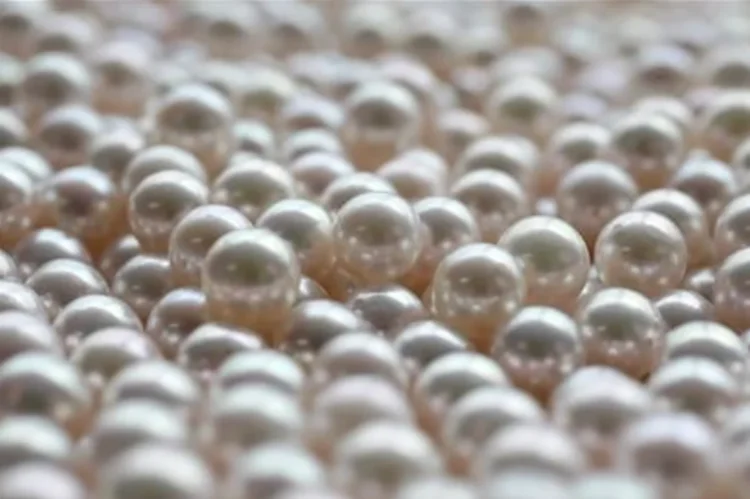
At Pearl Lumina, we specialize in authentic pearls, guaranteeing the quality of every piece of pearl jewelry. In this guide, we’ll walk you through the key differences between real and imitation pearls and provide simple tests you can do at home to determine their authenticity.
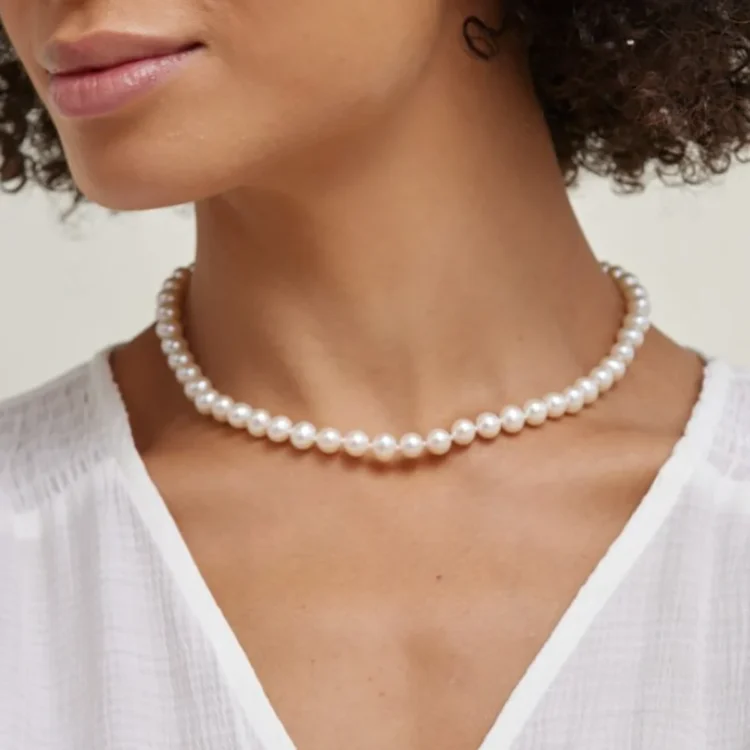
Understanding Real Pearls
Real pearls are organic gemstones formed by mollusks in freshwater or saltwater. They fall into two categories: natural pearls, which form without human intervention and are extremely rare, and cultured pearls, which are farmed by inserting a nucleus into the oyster. However, whether a pearl is natural or cultured, it is still considered authentic.
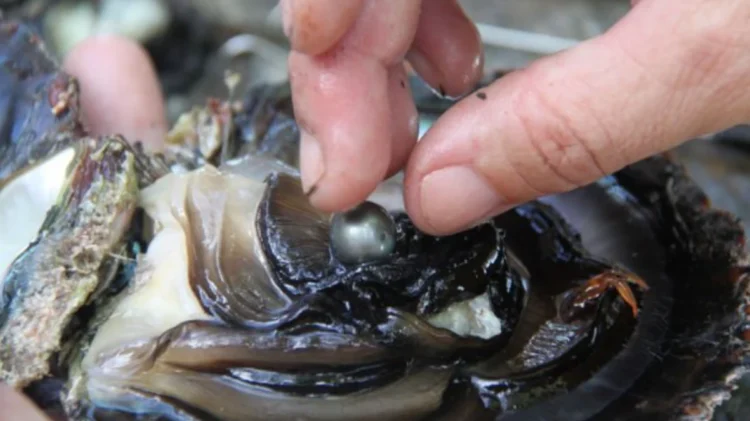
In contrast, imitation pearls are synthetic, lacking the natural luster and irregularities of real pearls. Genuine pearls have a soft, deep glow and subtle surface ridges, distinguishing them from the flawless, uniform appearance of fakes.
Real vs. Fake Pearls: Key Differences
Real pearls—whether natural or cultured—form inside mollusks and develop organic features unique to each pearl. Imitation pearls, on the other hand, are man-made beads designed to mimic the appearance of real pearls. They are typically made from materials such as glass, plastic, or ceramic, and can be coated with synthetic material to mimic a pearl’s luster. While they can be crafted to look convincingly similar to real pearls, there are key differences that can help you identify them.
Comparison Chart: Real Pearls vs. Fake Pearls
| Feature | Real Pearls | Fake Pearls |
|---|---|---|
| Surface | Slight imperfections, natural texture | Flawless, overly perfect surface |
| Luster | Deep, soft glow with natural depth | Artificial, overly shiny, glassy reflection. Lacks natural depth |
| Shape | Slight variations, rarely perfectly round | Perfectly round, highly uniform shapes |
| Weight | Heavier due to organic nacre layers | Lighter due to synthetic materials |
| Temperature | Cool to the touch, warms with wear | Room temperature or plastic-like feel |
| Drill Holes | Clean with visible layers of nacre | Rough or chipped, coating may peel around drill holes |
How to Test If a Pearl Is Real — At-Home Methods
1. The Tooth Test (Texture Test)
2. Surface Inspection (Imperfections Test)
Best for: Spotting telltale natural features. Examine the pearl’s surface under bright, natural lighting. Real pearls feel slightly gritty or sandy due to their natural nacre layers. Fake pearls feel smooth or glassy, as they lack true nacre. Two pearls test – This can also be performed by gently rubbing two pearls together or against a glass surface to feel for a gritty texture, which indicates authenticity. Expert Insight: No two real pearls are ever identical, even in a strand.
3. The Weight Test
Best for: Checking density. Hold the pearl in your hand and compare its weight to a known plastic or glass bead. Real pearls feel noticeably heavier due to their solid, organic composition. Fake pearls are usually lightweight and may feel hollow. Imitation pearls made from plastic beads tend to feel lighter than real pearls. Note: While glass-based fakes can be heavier than plastic imitations, they still lack other real pearl characteristics like warmth and organic texture.
4. The Temperature Test
Best for: Quick touch verification. Place the pearl against your skin or lips. Real pearls feel cool to the touch at first, then gradually warm up with wear. Fake plastic pearls tend to stay at room temperature or feel plasticky. Why? Pearls naturally retain coolness due to their organic composition.
5. The Drill Hole Test
6. The Reflection Test
7. Professional Testing (Advanced Methods)
Common Types of Fake Pearls
Some imitation pearls look remarkably real, but there are key differences:
| Type | Description | How to Identify |
|---|---|---|
| Glass Pearls | Coated glass beads mimicking luster | Slightly heavier, surface can chip |
| Plastic Pearls | Lightweight costume jewelry pearls | Very light, lacks cool temperature |
| Shell Pearls | Made from ground oyster shell | Too smooth, lacks organic imperfections |
| Majorica Pearls | High-end simulated pearls from Spain using fish scales | Thick coating, no true nacre structure |
| Synthetic Pearls | Man-made pearls with uniformity and smooth texture | Lack of organic imperfections, uniform surface, and different tactile qualities |
Types of Real Pearls
Real pearls are formed naturally inside mollusks, either in freshwater or saltwater environments. Each type has distinct characteristics, including variations in color, size, luster, and rarity. Below, we explore the four primary types of cultured pearls found in fine jewelry.
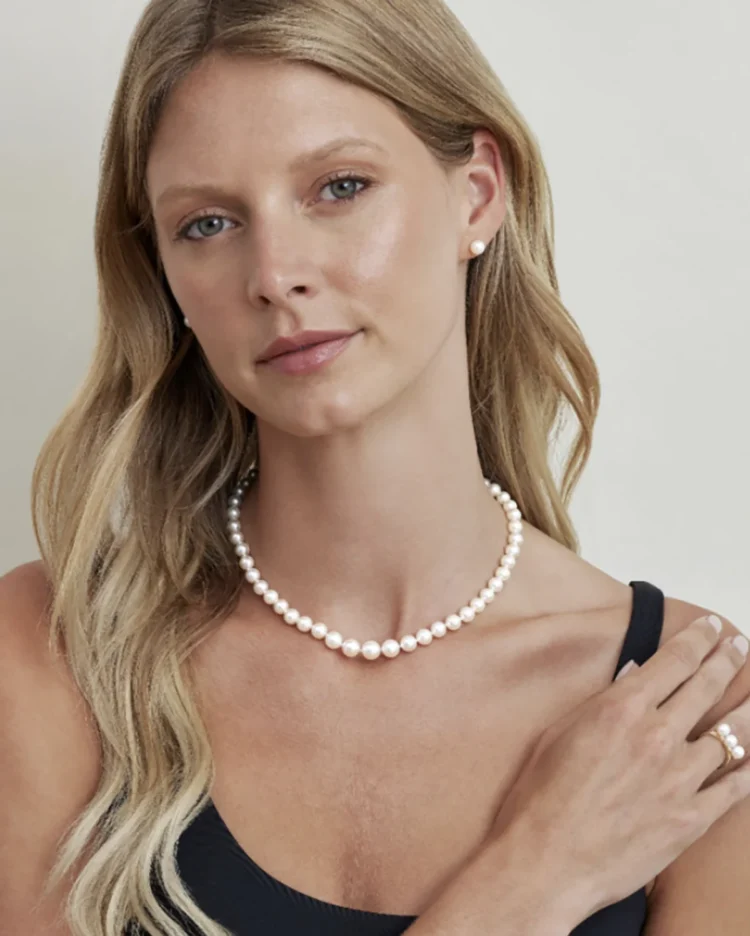
Akoya Pearls
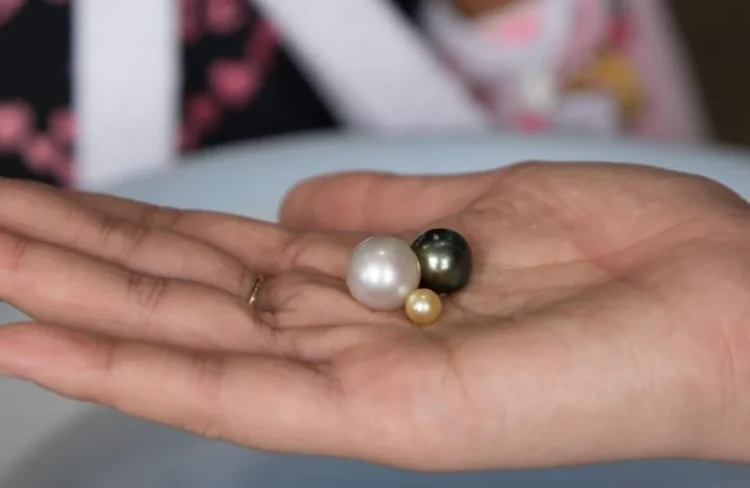
Akoya pearls are the most traditional and iconic white pearls, prized for their near-perfect roundness and brilliant shine. Unlike imitations, Akoya pearls are often bead nucleated cultured pearls, known for their bright luster and perfect round shape, making them highly desirable in jewelry. These saltwater pearls are primarily farmed in Japan and China, using the Pinctada fucata martensii oyster.
Key Features:
- Classic white and cream colors – Often with rose or silver overtones
- Perfectly round shapes – The highest percentage of round pearls among all types
- Bright, mirror-like luster – The sharpest reflective quality of any pearl
- Smaller sizes – Typically ranges from 5mm to 9mm
Tahitian Pearls
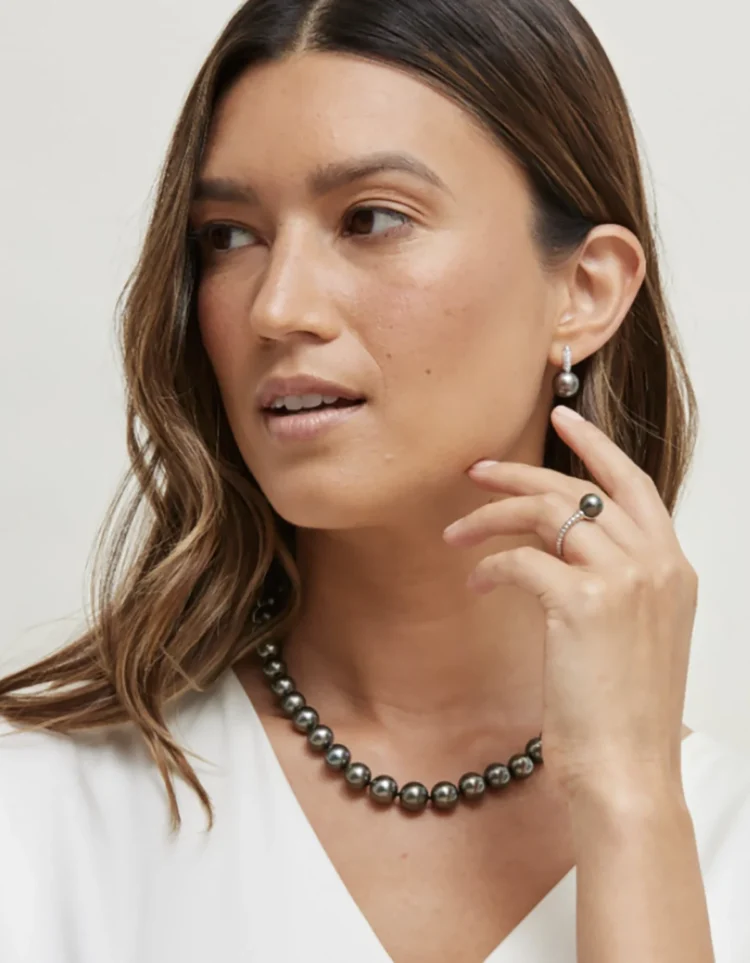
Tahitian pearls, often referred to as “black pearls,” are cultivated in the warm waters of French Polynesia, primarily in the Pinctada margaritifera oyster. Unlike dyed pearls, Tahitian pearls develop their dark colors naturally, making them one of the rarest and most exotic pearl varieties.
Key Features:
- Naturally dark colors – Often with rose or silver overtones
- Unique iridescence – Overtones shift between blues, purples, and greens
- Larger sizes – Typically ranges from 8mm to 15mm
- Variety of shapes – Round, oval, drop, and baroque
South Sea Pearls
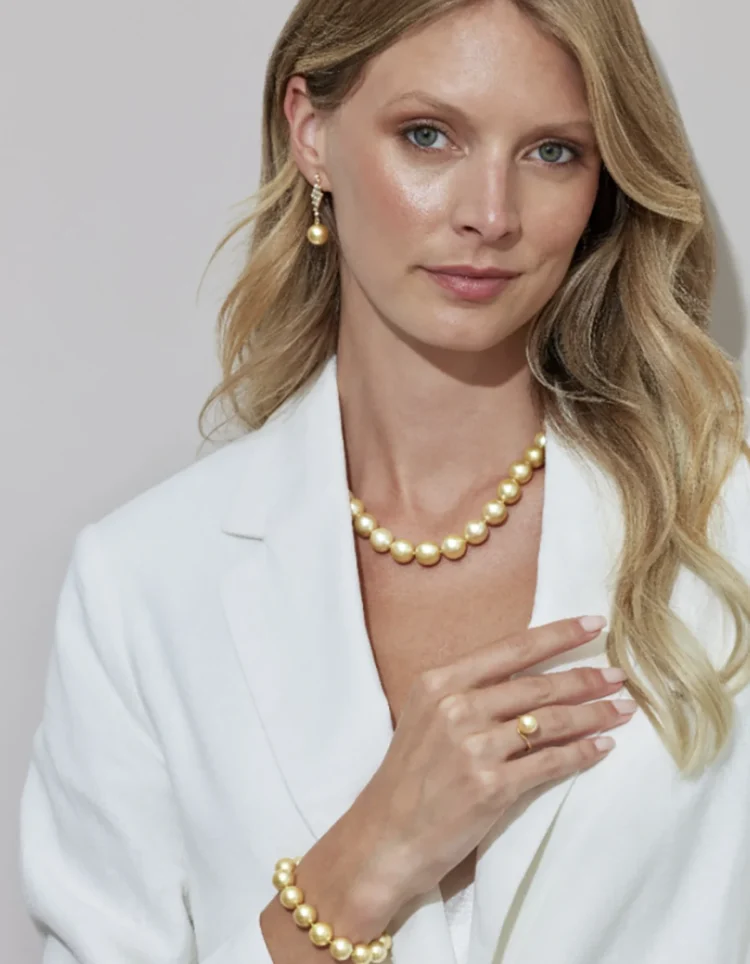
South Sea pearls are the rarest and most valuable cultured pearls, cultivated in the warm waters of Australia, Indonesia, and the Philippines. They are grown inside the Pinctada maxima oyster, the largest pearl-producing oyster species.
Key Features:
- Exclusive white and golden varieties
- Exceptional size range – 10mm to 20mm (some exceed 20mm!)
- Thickest nacre of all pearls – Providing a rich, satiny glow
- Soft, luxurious luster – Different from the sharp shine of Akoya pearls
Freshwater Pearls
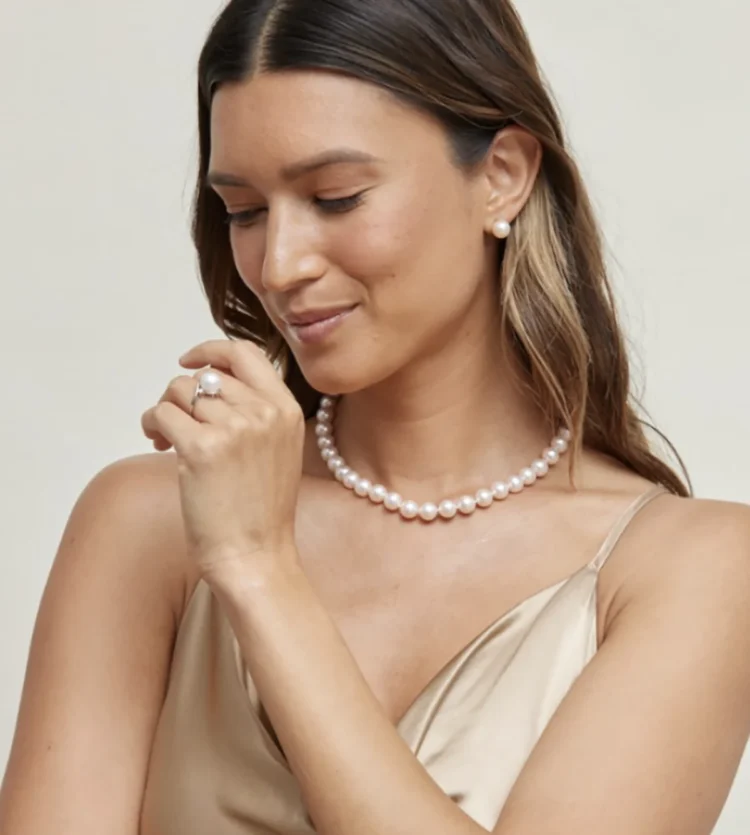
Freshwater pearls are cultivated in lakes, rivers, and ponds, primarily in China. Unlike saltwater pearls, freshwater pearls are grown in mussels rather than oysters, which allows them to produce multiple pearls at once.
Key Features:
- Natural pastel colors – White, pink, peach, and lavender
- Variety of shapes – Round, oval, button, and baroque
- Soft, satiny luster – More subtle than Akoya pearls
- Highly affordable – An excellent choice for everyday wear
Why Buy Authentic Pearls?
Investing in natural or cultured pearls means owning a timeless, valuable gemstone that retains its beauty for generations. Unlike imitations, genuine pearls develop character over time, making them even more special.
- Durability: Real pearls last decades with proper care.
- Investment Value: High-quality pearls hold or increase in value.
- Timeless Elegance: A genuine pearl necklace or earrings never go out of style.
Inspecting a Pearl Necklace?
When it comes to checking if a pearl is real, you’re likely to be looking at a complete piece of jewelry, such as a necklace. In this case, inspecting a pearl necklace is an essential step in determining its authenticity and ensuring you are investing in a high-quality piece. Here are some key aspects to look for:
- Check the Clasp: A real pearl necklace will have a sturdy clasp that is securely attached to the necklace. High-quality clasps are often made from precious metals and are designed to last. In contrast, fake pearl necklaces may have flimsy clasps that can come loose easily.
- Examine the Pearls: Take a close look at the gems themselves. Real pearls may have tiny imperfections, such as slight ridges or variations in shape, which add to their natural charm. However, they should not be excessively worn or damaged. Fake pearls, on the other hand, often have a flawless, overly perfect appearance.
- Check the Stringing: Real pearl necklaces are typically strung on a high-quality string, such as silk, that is designed to last. The stringing should be tight and secure, with knots between each pearl to prevent them from rubbing against each other. Fake pearl necklaces may be strung on a cheap string that can break easily.
- Look for Certification: Reputable sellers will provide certification and documentation of the pearl’s authenticity. This documentation is a valuable assurance that you are purchasing genuine pearls. Always ask for and review this certification when inspecting jewelry.
By carefully inspecting a pearl necklace, you can determine its authenticity and ensure that you are buying a high-quality product that will stand the test of time.
FAQ: How to Tell If Pearls Are Real
Are cultured pearls real?
Yes! Cultured pearls are grown inside oysters or mussels, just like natural pearls. The difference is that farmers help the process by inserting a nucleus to stimulate pearl formation.
Can real pearls be perfectly round?
Rarely. While some high-end Akoya or South Sea pearls come close, real pearls often have minor shape variations.
Do fake pearls ever peel?
Yes—many imitation pearls have a painted or coated surface that can wear away over time, exposing the material underneath.
Are all freshwater pearls real?
Yes, but some lower-quality freshwater pearls may be dyed or treated to enhance color.
What’s the easiest way to check if a pearl is real?
The Tooth Test and Surface Inspection are the quickest ways to spot fakes at home.
Shop Genuine Pearls with Confidence
At Pearl Lumina, we guarantee authentic, high-quality pearls that are hand-selected and responsibly sourced. Whether you’re looking for timeless pearl necklaces, elegant earrings, or statement bracelets, our collection offers certified, real pearls at exceptional value.